
Rundle at 40: The Campuses that Shaped the 90s
Published on December 4, 2025
In the early 1990s, Rundle’s student population climbed to 150, an impressive leap from the original 20 students in 1985. However, this momentum did not slow, and by the 1998—99 school year, enrollment would surge to 510 students, a growth that was only made possible by Rundle’s expansion into three new campuses: Barlow Trail, Chief Crowfoot, and Carl Safran.
Barlow Trail
The acquisition of the Barlow Trail building in 1993 was a key turning point for our school. With Bridgeland out of space and enrollment demand rising, Rundle purchased a 90,000-square-foot facility that finally allowed Rundle to grow. Renovations quickly turned the former industrial space into a vibrant junior and senior high campus, complete with a proper gym, upgraded fields, and room for new programs and staff.
Today, Barlow Trail is remembered as the campus that gave Rundle the room to grow, experiment, and turn new ideas into reality.


Chief Crowfoot Campus
In 1996, Rundle finally gained the chance to move into the Chief Crowfoot building after years of hoping it might one day become available. When the opportunity opened, we acted quickly to secure the site and establish a designated home for the newly established elementary program. Staff and leaders then helped refresh the space and redesign the classrooms to create a bright, welcoming environment for all of its young learners. This new campus quickly became the place where Rundle College elementary could develop its identity and early traditions that still shape the program today.


Carl Safran Campus
When Rundle moved into the Carl Safran Centre in 1996, it gained one of Calgary’s most distinctive educational spaces. The distinct style of architecture and central location in the city created an inspiring environment for students and educators. This space offered room for new programs and allowed for more space across all of our campuses. It soon became a cherished part of Rundle’s story and a campus that our families still remember fondly.
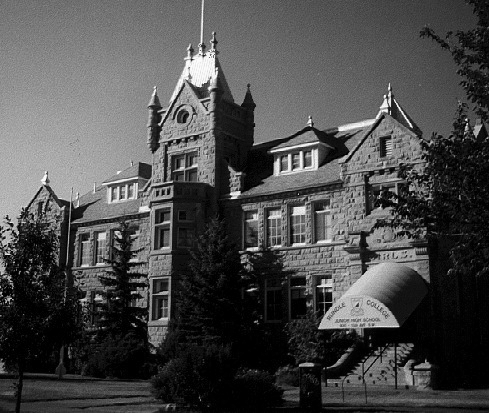


Each of these campuses played a pivotal role in Rundle’s story, creating the spaces where students could learn, grow, and thrive. Their collective impact remains woven into the culture and character of Rundle as it continues to look toward the future.